Bank Lviv sale shows Ukraine’s development finance model can actually work
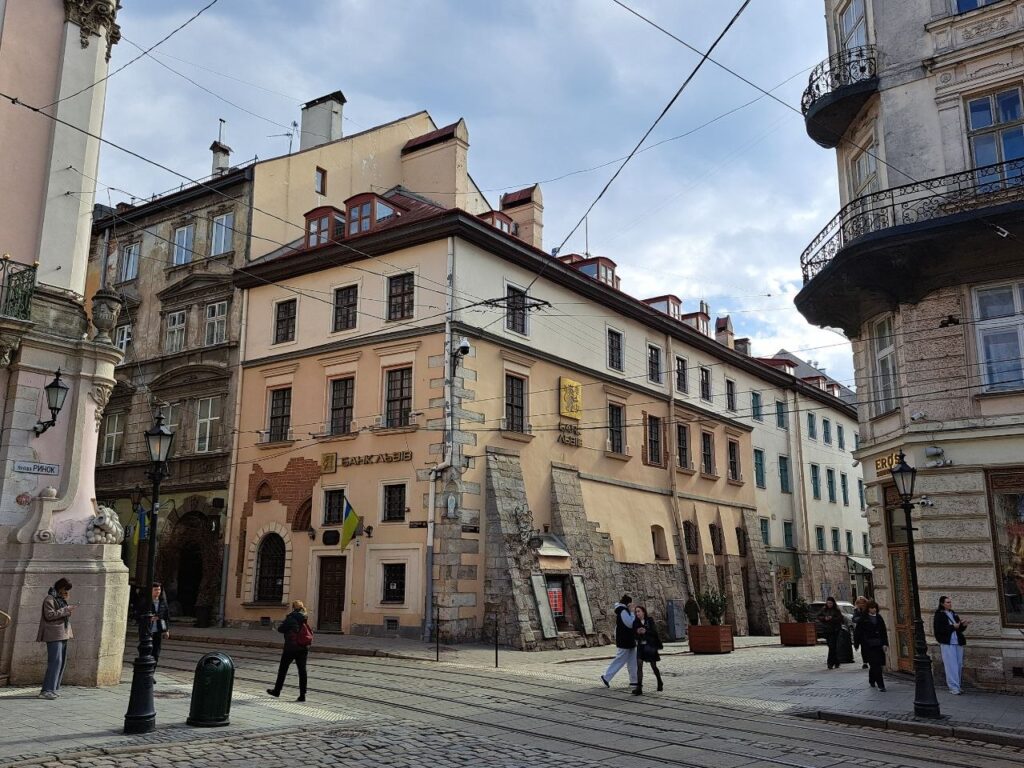

In 2006, an Icelandic chess grandmaster bought a tiny Ukrainian bank ranked 130th out of 150 by assets. Nordic and German development funds joined him. Together, they spent two decades turning it into a profitable lender with an 11 billion hryvnia ($268 million) loan book. On 11 March, a major French bank agreed to buy it—in the middle of a war.
The deal requires approval from the National Bank of Ukraine and the Antimonopoly Committee.
Crédit Agricole Ukraine signed an agreement to acquire up to 100% of Bank Lviv, a Lviv-based lender serving 8,400 small and medium enterprise (SME) clients and 37,000 retail customers concentrated in western Ukraine, the bank announced.
The deal requires approval from the National Bank of Ukraine and the Antimonopoly Committee, with completion expected by mid-2026.
The sellers: a chess grandmaster and three funds
The ownership structure behind Bank Lviv shows how Western capital has been building Ukraine’s SME economy. According to Forbes Ukraine, Icelandic investor and chess grandmaster Margeir Petursson acquired the bank in 2006 when it carried equity of roughly 60 million hryvnia (approximately $12 million).
Their thesis was that western Ukraine’s small businesses were systematically underserved by mainstream banking.
Development finance institutions took positions alongside him: Swiss asset manager ResponsAbility Participations became the majority shareholder in 2018 with 41%, the German government’s development fund DGGF holds 20.5%, and the Nordic Environment Finance Corporation NEFCO 10.3%, with Petursson retaining 28%.
Their thesis was that western Ukraine’s small businesses were systematically underserved by mainstream banking. By early 2026, the loan portfolio had reached 11 billion hryvnia ($268 million)—18th largest among Ukraine’s 60 remaining banks—with 99% of lending going to businesses. The bank posted 325 million hryvnia (about $8 million) in net profit in 2025, Forbes Ukraine reported.
Most development finance exits are polite failures. This one found a commercial buyer at a profit, mid-war.
Geography is the point
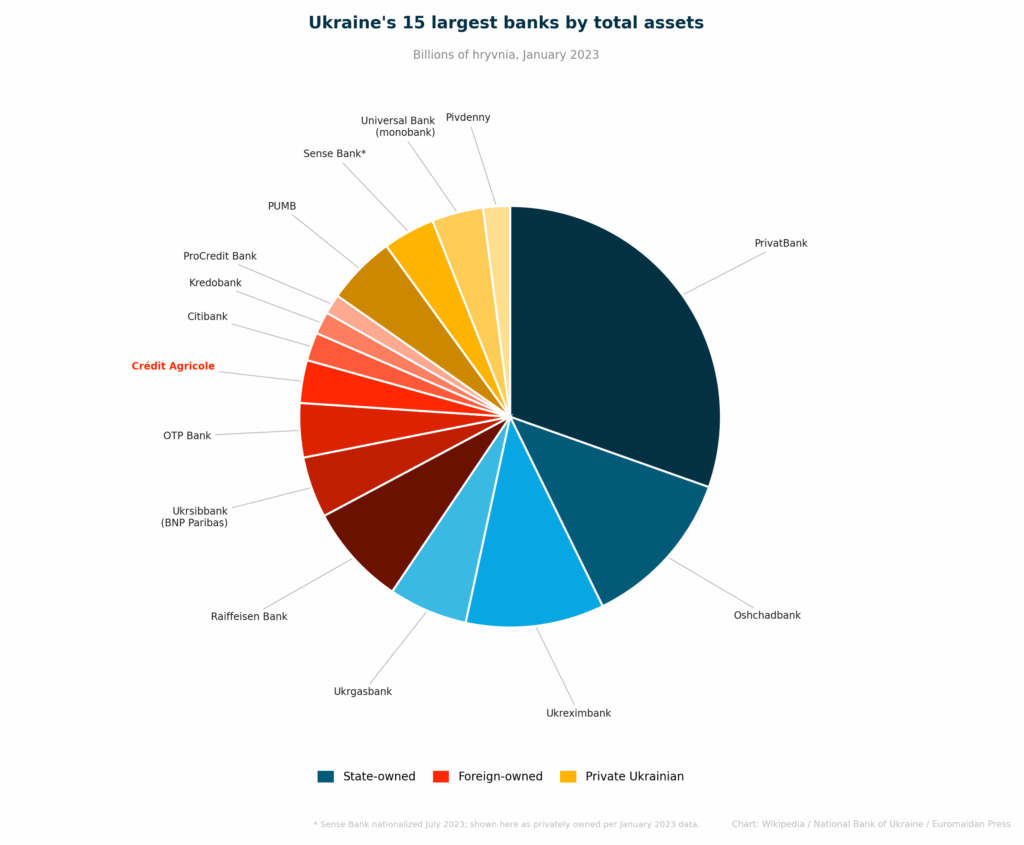
Crédit Agricole’s Ukrainian presence dates back to 1993, when its predecessor, Crédit Lyonnais, founded a Kyiv bank that became part of the group in 2004. In 2006, Crédit Agricole acquired Index-Bank, expanding into retail and SME banking. It now operates 137 branches, serving 380,000 clients and holding $2.8 billion in total assets as of January 2026.
For western Ukrainian farmers and entrepreneurs, this means access to a larger institution’s capital and product range.
Bank Lviv’s 22 branches are concentrated in Lviv and the surrounding area—well clear of the active front lines—and its clients are primarily SMEs and agribusinesses.
For western Ukrainian farmers and entrepreneurs who bank with Bank Lviv, this means access to a larger institution’s capital and product range. For Crédit Agricole, it means a shortcut into a regional SME network that would have taken years to build from scratch.
Beyond one bank
Jukka Laikari, a Lviv-based investment and reconstruction advisor who has followed Ukraine’s mergers and acquisitions market since the full-scale invasion, sees the deal as a signal of something broader than one purchase.
For investors already operating in Ukraine, acquisition is becoming the logical way to expand.
“These transactions are not just about individual banks expanding their footprint,” Laikari wrote on LinkedIn after the announcement. “They may represent early indicators of how international capital will approach Ukraine’s next economic phase.”
His broader point: for investors already operating in Ukraine, acquisition is becoming the logical way to expand—buying established local platforms with existing client relationships and regional expertise.
One open question
One complication sits in the background. Ukraine’s central bank requires that any banking group acquiring a Ukrainian institution have an “impeccable reputation”—a standard it has said may exclude groups that retain commercial activity in Russia.
Both sides expect the deal to close by mid-2026.
Sources close to the deal, cited by Forbes Ukraine, flagged this as a potential obstacle for Crédit Agricole’s parent group, which still has some Russian market presence. Both sides expect the deal to close by mid-2026, but the NBU has not publicly confirmed its position.