
Andy Burnham’s departure could put Manchester’s growth at risk
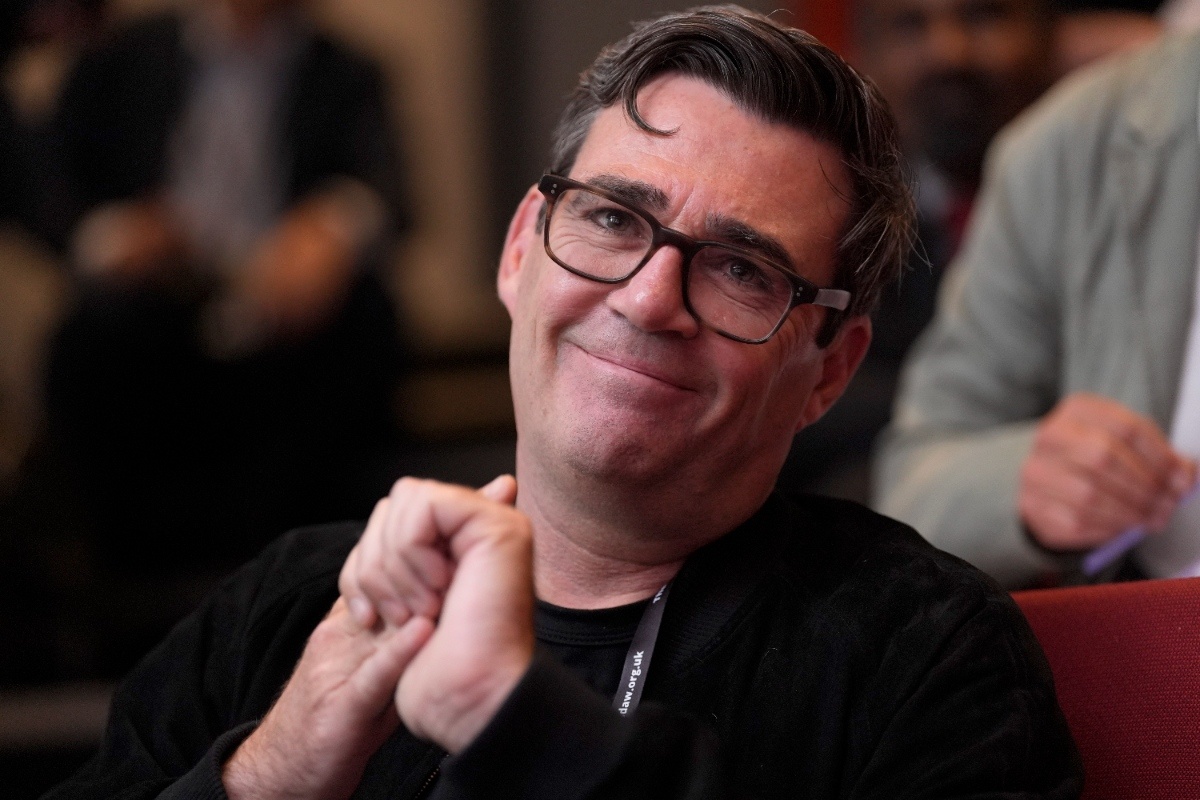

Andy Burnham is not actually obliges to step down as Mayor to contest the Makerfield by-election, but if he does his departure would leave Manchester more susceptible to fragmented national politics, says Simon Goacher
Andy Burnham’s decision to run in the Makerfield by-election is being treated largely as a Westminster comeback – a route back to Parliament and, potentially, a platform for national leadership. Much of the commentary has focused on whether Burnham might lose the contest, and the implications of that nationally. But for those of us who live and work in Greater Manchester, there is an equally significant question – what happens if he does win.
Before answering that question, it is important to clear up one point that has been miscommunicated on several occasions in the media – Andy Burnham is under no obligation to resign as Mayor of Greater Manchester in order to stand in the by-election. Under the current framework governing combined authority mayors who are police and crime commissions (as Burnham is), he would be required to step down if elected to the House of Commons.
There is clear precedent for this – Tracey Brabin resigned as an MP when she won the West Yorkshire Combined Authority mayoralty, but she did not resign in order to stand. While this was a reverse scenario, the legal principle remains.
And many will be thankful that this is the case. A mayoral by-election across Greater Manchester would come at substantial public expense, with reports estimating that the costs of this by-election may reach £5m. Amid sustained pressure on both local authority finances and central government spending, there is unlikely to be much appetite for funding another major metropolitan election at short notice, unless it is absolutely necessary.
Don’t dismiss Reform
Equally, from Burnham’s perspective, Makerfield is not without political risk. Retaining the mayoralty while contesting the seat preserves institutional continuity and provides political security should the by-election not go in his favour. Whether or not it would be politically viable to stay on as mayor, whilst seeking an alternative role or having just handed Makerfield to Reform, is a question I’m sure Burnham’s advisors are currently pouring over.
That possibility cannot be dismissed. The electoral landscape in Greater Manchester, just like the national picture, is becoming increasingly fragmented. Strong performances in the recent local elections and the Gorton and Denton by-election earlier in the year have given the Greens growing credibility in Labour-held urban areas.
At the same time, Reform UK has established itself as a serious electoral force across parts of the North West. In Wigan, where the Makerfield constituency is situated, earlier this month, Reform won 24 of the 25 council seats it contested. Nationally, its gains of more than 1,400 councillors and control of 14 councils point to a party building durable support in post-industrial communities traditionally associated with Labour.
However, unlike the national picture – where public opinion of the Labour leadership appears to be a hindrance – the assumption in Manchester is that Burnham’s popularity, and that alone, is keeping Labour in office.
The true picture is unlikely to be as black and white as this, but polling does show a stark difference between perceptions of the Prime Minister and his potential challenger. YouGov’s April 2026 favourability ratings placed Burnham on a positive net score of +9, while Keir Starmer stood at –45.
For Labour, the risk is not simply losing a mayoralty. It is that a Burnham departure could expose how fragile the party’s hold on metropolitan England may have become without locally dominant political figures insulating it from national unpopularity
If Burnham does return to Westminster, Labour would immediately face a mayoral by-election without the individual who has been the face of the party in Greater Manchester. That creates a scenario which would once have seemed implausible less than a year ago but now appears entirely credible: a genuinely competitive mayoral race in Greater Manchester.
For Labour, the risk is not simply losing a mayoralty. It is that a Burnham departure could expose how fragile the party’s hold on metropolitan England may have become without locally dominant political figures insulating it from national unpopularity. For Greater Manchester, it could bring the volatility and uncertainty of national politics – the region has so far avoided at a mayoral level – much, much closer to home.
Simon Goacher is a local government lawyer and partner at law firm Weightmans