
90% of Russian passenger traffic still flies on Boeing and Airbus, while Russia promotes its MS-21 as “Boeing killer”
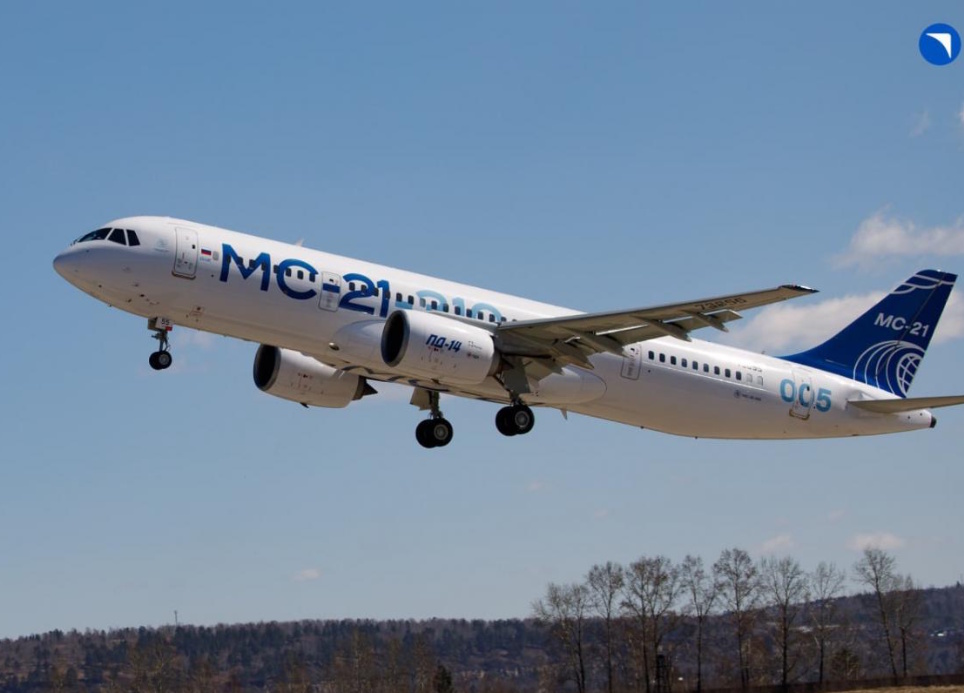
Russian propaganda has again returned to promoting the “promising” MS-21-310 medium-range aircraft, framing it as a breakthrough in aviation. This comes amid failures in other high-profile projects, including the lunar program and the Baikal light aircraft, according to Ukraine's Foreign Intelligence.
In 2017, the aircraft, powered by an American engine and equipped with imported composites, had a range of up to 5,100 km and could carry up to 175 passengers.
Sanctions increase weight and reduce range
Following sanctions and the shift to import substitution, the aircraft’s characteristics have significantly deteriorated.
The updated version weighed about 6 tons more, while its maximum range dropped to 3,830 km. The Russian PD-14 engine consumes more fuel, increasing operating costs.
As a result, even domestic routes remain dependent on Western-built aircraft.
MS-21 lags behind Boeing and Airbus before entering service
For comparison, the Airbus A320neo has a range of up to 6,500 km, while the Boeing 737-800 has a range of up to 5,700 km.
Against this backdrop, the Russian aircraft already falls short on key performance metrics. The proposed MS-21-210 variant has also drawn skepticism, even among Russian experts, due to its lower capacity and questionable economic viability.
Certification delays undermine serial production prospects
Certification timelines have been repeatedly postponed, from 2023 to approximately 2027.
Currently, only three flight prototypes exist, having completed about 30% of the required testing.
Even if mass production begins, the real operational range may drop to around 3,000 km.
Russian aviation remains dependent on Western fleets
Despite claims of import substitution, about 90% of passenger traffic in Russia is still carried by Boeing and Airbus aircraft.
Due to sanctions, airlines are increasingly forced to cannibalize some planes for spare parts to keep others operational.
A country that claims to be building a “Boeing killer” remains, in practice, dependent on Western aviation technology.